

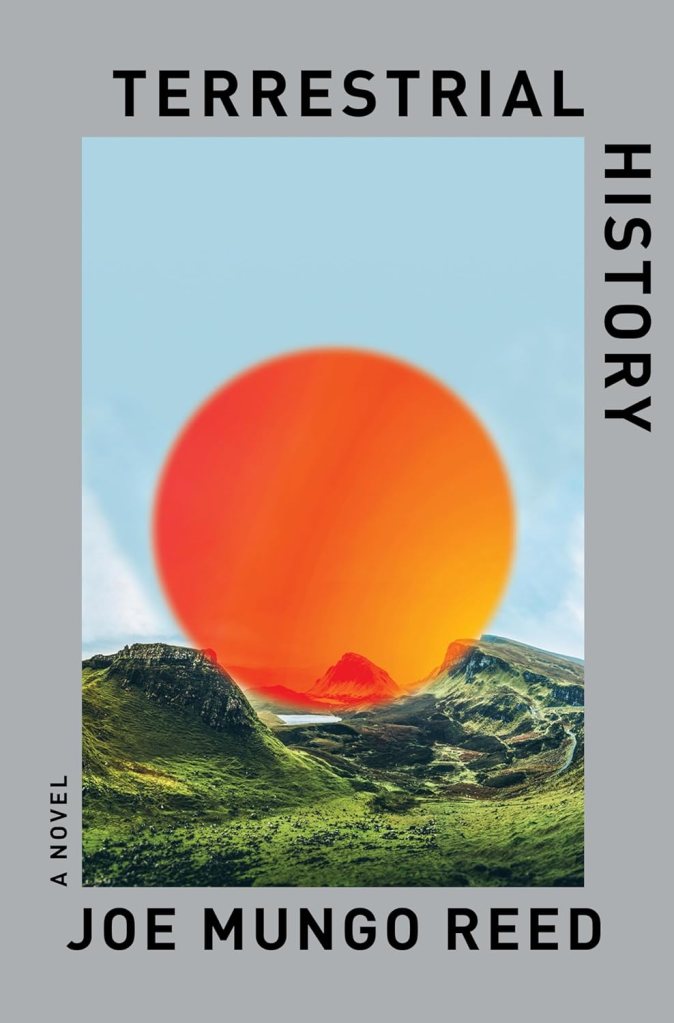
By the twenty-second century, Earth has been abandoned, left behind as a dead world consumed by climate crises, serving only as a monument to our communal failure as a species. Humanity, or what is left of it, survives in a corporate outpost on Mars known as the Colony, populated by the affluent and the powerful and controlled by the ever-present Corporation Administration and its interests. Within this sterile environment a new generation of children, known as First Gens, are born plagued by maladies and birth defects that rob them of their own mobility and, ultimately, their lives. One day, a fatal accident seems to suggest that it might be possible to create a temporal bridge, and one First Gen, the descendant of a family intrinsically linked to the creation of the world he inhabits in his present, is faced with the opportunity to change the past.
If you could change Earth’s history, would you take that gamble? This is the question that, at first glance, appears to be at the center of Joe Mungo Reed’s Terrestrial History. The idea of engaging in temporal shenanigans in order to alter a calamitous future fate is a classic and revered genre staple that often enough makes an appearance in all kinds of science fiction media, whether in the context of engineered pandemics or cybernetic killing machines. It is not at all surprising, then, that in the midst of our currently suicidal political climate and growing existential dread regarding climate catastrophes the notion of time alteration might be tapped into once again. What is surprising, however, are the subtle, understated, and intimate ways in which this central question is addressed, making it not just relevant again but also hauntingly moving and oftentimes prescient.
Terrestrial History is one of those books that is built on a complex narrative structure that in the hands of a less talented writer would quickly break down into unintelligible fragments of a disjointed pastiche. Instead, not only does this novel succeed in deftly weaving together its encapsulated stories, but it does so in an organic fashion that easily moves among individual lives and decades. It is an exceptionally ambitious piece of writing in its construction and execution, but it does this while securing its narrative on a familial scale. The backdrop of climate annihilation looms large across the generations that we follow and the decisions that the book’s characters make, but the intimacy of these lives, of their hopes, motivations, weaknesses, and strengths, is always front and center.
This book is also a prime example of positive queer representation at a time when it is needed the most. There is one proviso attached to this positive observation, however, and that is the fate of a character who, while not really falling into the much-reviled “bury your gays” trope, I found skirted somewhat perilously close to it. I do, however, fully acknowledge that this is a product of my own subjective reading and might not be interpreted in the same way by everyone.
Writing on a primarily humanistic scale is commendable in a genre where the humane is often eclipsed by the obscene attraction of the apocalyptic spectacle or is woefully presented in glib collections of clichés. Terrestrial History, in contrast, is determined to remain on a human scale while tackling head-on the twilight of our species.
The true core of Terrestrial History lies within the generational story of its protagonists. Hannah, the closest to our time, is engaged in researching new and efficient ways of generating clean energy via fusion, and to that end, she has progressively closed herself off from the world, as she senses her time, and the planet’s time, running out. Her son, Andrew, seeks to preserve hope in humanity by direct political action, eventually running for political office in an effort to enact positive policies that will arrest or at the very least slow down the coming doom. His daughter Kenzie continues her grandmother’s dream of achieving a breakthrough, all the while experiencing an ever-widening alienation from her idealist father as she accepts funding from billionaire Axel Faulk, our Elon Musk stand-in whose dreams of colonizing Mars concern placement for solely the highest bidders. And finally, Roban, Kenzie’s son, is a First Gen born in the Colony who, like all children of the outpost, carry multiple bodily deformations and medical conditions. A victim of the sterility and microgravity of the Red Planet, he is adept at using a work suit known as an Exo frame to move about and eventually conduct prospecting missions for the corporation in the asteroid belt. It is on one of these missions where an unexpected event of unimaginable possibilities awaits him.
Overreliance on time travel could have been an easy trap to fall into. Just as well, the idea could have been used as a throwaway plot device to get things going. Rather, the concept of time alteration is used as an elegant solution to tie the beginning and the end of the novel in a way that mirrors the linear passing of time. The consequences of time mechanics and dynamics are not the point of the story but instead represent another thread in this book’s delicate tapestry of motive forces, playing specific roles in relevant moments of the characters’ lives.
Time is its own agent in this tale, and with it come the consequences of decisions. Responsibility, loss, and coping with loss are themes revisited in each of this novel’s characters and examined from their point of view. It is often revelatory hindsight after the passage of natural time that describes cause and consequence. Each character wrestles with these points without losing sight of the ever-present threat of climate-led annihilation. These shared themes echo with each self-reflection, every reaction. In ways that feel organic and fresh, Reed’s characters live with and process absence and pain much like us as we feel the creep of darker times ahead.
Of noteworthy relevance is the novel’s tone regarding our present political and economic paradigms. It is fiercely anticorporatist and highly critical of governments’ inaction, subservience to late capitalism, and egotistical drive toward self-preservation. Axel Faulk, this book’s reigning technofeudal oligarch, is an object of absolute hatred by one character and of objectivist veneration by another to the point of familial disconnection, even though the latter individual admits to the uneasiness caused by Faulk’s character and demeanor as it describes the billionaire’s mental manipulation techniques as parasitic. This tension between doing what is right and securing one’s self-preservation, a question faced by every one of the book’s generations in related and different contexts, is often accompanied by the shadow of those forces that allow people like Faulk to survive and thrive.Terrestrial History is an excellent novel that is quite accessible while often not being an easy read because of its time jumps and strong moments that could be triggering to those with high anxiety related to climate change. With this brief disclaimer in mind, I cannot recommend this book enough. It is a painfully beautiful story inspired by a hard reflection on our current fears and anxieties regarding climate catastrophes and the survival of the human race. It is not, however, devoid of hope. In fact, it is this sense of hope that anchors the multiple temporalities mirrored to each other within the fabric of its pages, a hope that time itself can be made to secure our survival, despite or even inspired by loss and fear. In our uncertain times, books like this one are not just welcome but very much needed.
©2024 Miguel A. Cruz Díaz
Miguel A. Cruz Díaz is a native son of the island of Puerto Rico, a paradise currently being devoured by American neo-colonial vultures. He holds a PhD in history from Indiana University. His academic work is centered on the study of anti-fascist resistance, an incredibly timely, and dangerous, subject to be involved with at the moment. When not adding to this FBI dossier by writing public think pieces, Cruz Díaz spends his time reading, writing, playing strategy games, drawing, or building scale models.
 The Kismet Magazine
Leave a comment